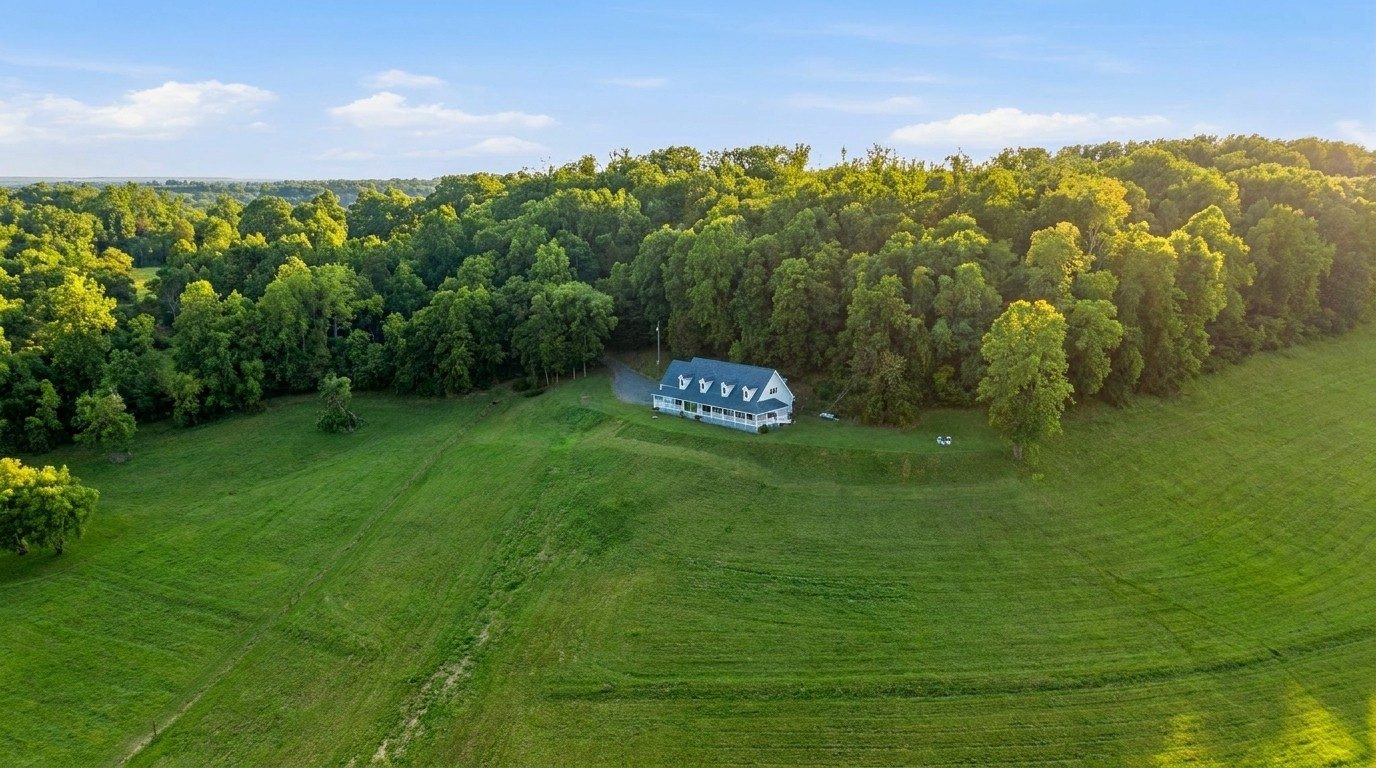
If you own acreage in Tennessee, or are about to, the Greenbelt program is one of the most valuable, and most misunderstood, tools for keeping your property taxes in check. Here is how it works.
Formally, it is the Agricultural, Forest and Open Space Land Act of 1976. In plain terms, Greenbelt lets qualifying land be taxed on its present-use value, what it is worth as a farm or forest, rather than its full market value. On land near a growing area like Franklin or Nashville, where the market value of acreage has climbed steeply, that difference can translate into substantial annual savings. The program exists to help keep farm and forest land in production and open space open, instead of taxing owners off the land they steward.
The three kinds of qualifying land
An owner petitions the county property assessor to classify land in one of three categories:
- Agricultural land — a tract of at least 15 acres actively used for farming (growing crops, plants, livestock, nursery, or floral products). A smaller tract of 10 to 15 acres can qualify if the owner has another tract already in the program that meets the 15-acre minimum.
- Forest land — a tract of at least 15 acres.
- Open space land — a tract of at least 3 acres.
The farm-income test
For the agricultural classification, the land must show that it is genuinely farmed. The standard test is the property's ability to generate an average annual gross farm income of at least $1,500 over any three-year period. Leasing your pasture to a cattleman, cutting and selling hay, or raising a crop can all satisfy it, which is one reason you so often see hay rolls and grazing cattle on otherwise residential acreage.
How much can you save?
Because the assessment is based on use value rather than market value, the taxable value of enrolled land can be a fraction of what it would otherwise be. The exact savings depend on the county's use-value schedule and your tax rate, but on desirable acreage in Middle Tennessee, owners frequently see their land assessment, and the tax that follows, reduced significantly. It is worth asking your assessor for an estimate on a specific tract.
The acreage limits
There are caps on how much land one owner can enroll. For the agricultural classification, the limit is 1,500 acres per owner, per county. For forest and open space land, the limit is 3,000 acres within a single taxing jurisdiction.
The catch: rollback taxes
Greenbelt comes with an important string attached. When land stops qualifying, because it is developed, subdivided below the minimum size, converted to a non-qualifying use, or otherwise removed from the program, the owner owes rollback taxes. Rollback is the difference between the taxes actually paid under Greenbelt and what would have been owed at market value for the recapture period:
- Agricultural and forest land: the current year plus the two preceding years (three years total).
- Open space land: the five most recent years.
In a sale, who pays the rollback is often a point of negotiation, so it is something to address in the contract rather than discover at closing. If you intend to keep farming or foresting the land, rollback simply never comes due.
How to apply
Greenbelt is not automatic. You file an application with your county property assessor, and there are annual deadlines, so it pays to apply early and confirm the date locally. Just as important for buyers: a Greenbelt classification does not always carry over automatically when land changes hands, so a new owner generally needs to re-file to keep the property enrolled. Make that part of your closing checklist.
Questions about land and taxes in Middle Tennessee?
Whether you are buying acreage near Franklin or Nashville or weighing a Greenbelt enrollment, we are glad to point you in the right direction.
Contact Charlie NeeseThis article is general information and not tax or legal advice. Greenbelt rules are administered at the county level and can change; confirm the current requirements, deadlines, and rollback exposure with your county property assessor and the Tennessee Comptroller of the Treasury before relying on it.